Learn how accounting software in Oman can automate VAT calculations, tax filing, reporting and compliance, minimize tax mistakes and enhance business efficiency.
All in the Oman business world is shifting towards digital financial management, which has made financial processes easier and more compliant. Businesses have to rely on systems that can process taxation accurately and efficiently now that the VAT regulations have been put into effect, and there are increasing financial reporting requirements. This is where modern accounting software is needed.
Traditional manual tax calculations, spreadsheets and paper-based reporting can be delayed, compliance risked and calculations incorrect. Automated accounting systems address these challenges by streamlining financial processes, helping businesses stay compliant with Oman’s tax laws.
From a small business to a retail outlet, a distributor or an enterprise organisation, accounting software in Oman can help to save time on administration and increase accuracy and reporting when it comes to taxes.
Automated tax reporting is a vital need for businesses in Oman:
One of the most important obligations of businesses in Oman is tax reporting. Companies need to keep the appropriate records and calculations of VAT, and produce accurate reports for regulatory purposes.
The following is a typical approach to accounting:
- Manual data entry
- Spreadsheet calculations
- Paper invoices
- Separate tax records
- Human verification processes
These techniques lead to a better chance of:
- Duplicate entries
- Incorrect VAT calculations
- Missing invoices
- Delayed filings
- Financial inconsistencies
These inefficiencies are eliminated with automated accounting software, which pulls financial data together in one place. All transactions are recorded automatically and businesses can easily create tax reports at any time.
With businesses going in for digital transformation, the many organizations are also adopting integration of their systems with the ERP software in Oman solutions, for a complete operation management.
The Benefits and Features of Using Accounting Software for Tax Compliance:
The modern Accounting Software offers businesses with instruments that automate each step of the tax reporting process. The system processes complicated financial calculations in real time, from invoice creation to VAT summaries.
Automatic VAT Calculations:
Real-time VAT calculation is one of the greatest benefits of automated accounting system. VAT percentage is automatically applied to products and services when the software is used to create an invoice.
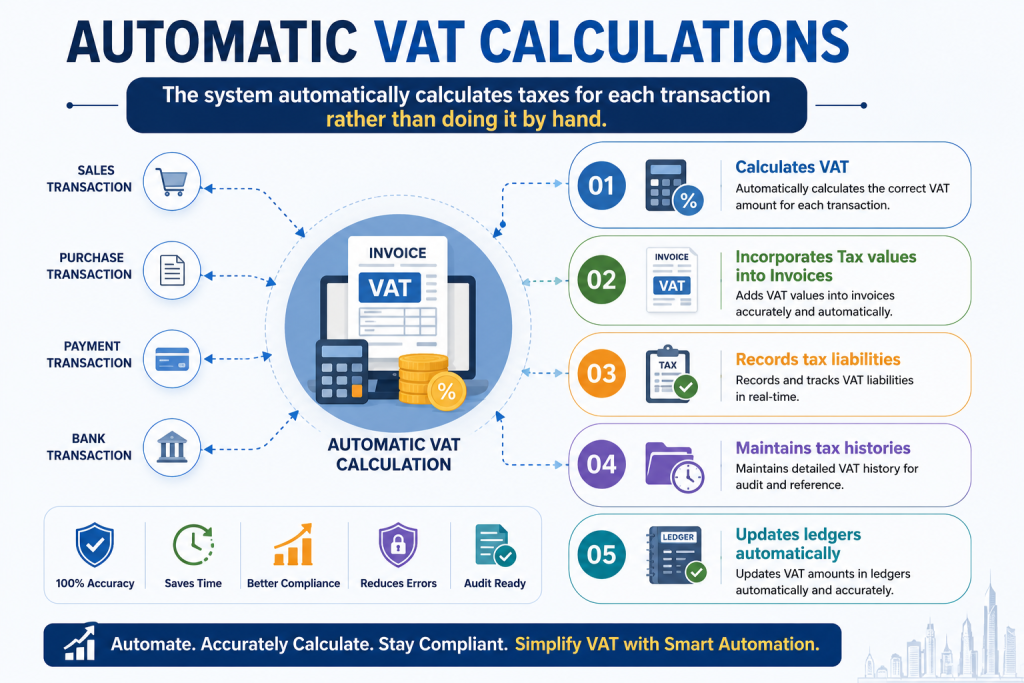
The system automatically calculates taxes for each transaction rather than doing it by hand:
- Calculates VAT
- Incorporates Tax values into Invoices
- Records tax liabilities
- Maintains tax histories
- Updates ledgers automatically
This significantly cuts down on any human error and helps businesses keep a proper tax record of the business year.
Centralized Financial Data:
When financial information is distributed across various departments or even spreadsheets, tax reporting becomes complex. Accounting software brings together all your transaction data and stores it on one secure platform.
This enables companies to:
- Access invoices instantly
- Track tax payments
- Monitor outstanding liabilities
- Review financial statements
Create tax summaries in no time at all.
Centralized approach also enhances visibility across finance functions, auditors and management.
Automated Invoice Management:
Invoices are a significant factor in tax compliance. Paper invoices can cause the loss of records and inaccurate reporting.
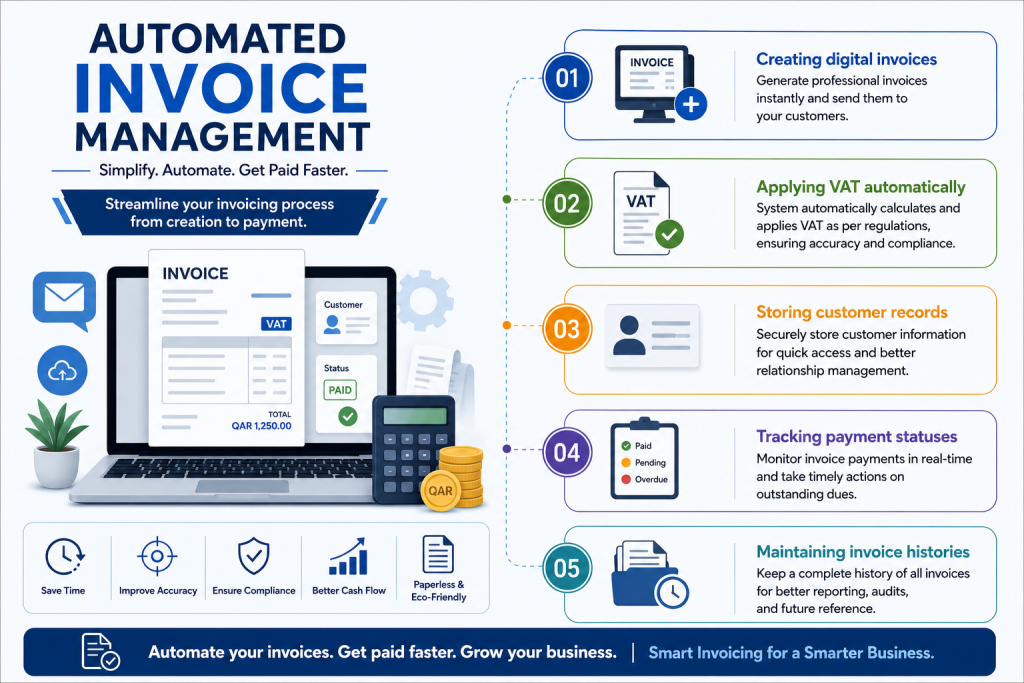
Accounting software streamlines the invoice generation and management process by:
- Creating digital invoices
- Applying VAT automatically
- Storing customer records
- Tracking payment statuses
- Maintaining invoice histories
All invoices are automatically recorded for proper tax filing.
When businesses are looking to achieve total financial integration, they have to integrate their accounting software with a solution provided by an experienced ERP software firm for better functioning.
When choosing accounting software for tax reporting in Oman, there are several key features to consider, such as:
An ideal Accounting Software in Oman not only simplifies the taxation process but also aids in managing finances more effectively.
Key features that businesses should consider:
VAT Management Tools:
VAT management tools make tax compliance easy by streamlining tax calculations and reporting.
Typically, these tools offer:
- VAT invoice generation
- Input and output VAT tracking
- VAT summaries
- Tax return preparation
- Tax transaction history
Using automation reduces reporting delays and minimizes compliance risks.
Real-Time Financial Reporting:
Financial reports come with real-time transaction data and are generated using automated systems.
Companies can readily gain access to:
- Profit and loss statements
- Tax summaries
- VAT liability reports
- Sales reports
- Purchase tax reports
Real-time reporting ensures management can make informed financial decisions and tax filings are accurate.
Cloud Accessibility:
A lot of accounting software oman solutions are now cloud-based. This allows finance teams to securely access tax reports from anywhere.
Cloud systems additionally provide:
- Automatic backups
- Multi-user access
- Remote financial management
- Enhanced data security
- Faster software updates
This flexibility is very advantageous to companies with many branches.
The integration of the sales software with ERP systems:
Modern ERP Accounting Software brings together accounting, inventory, HR, procurement and sales in a single system.
All departments enter data into a single system, which enhances tax reporting.
For example:
- VAT is automatically updated when sales transactions are made.
- The input taxes are included in the purchase records.
- The movement of inventory is a factor that influences financial statements.
- Payroll costs are connected with accounting ledgers.
- This helps to minimize duplicate entries and consistency of reporting.
How ERP Accounting Software Enhances Tax Automation:
ERP Accounting Software provides businesses with a more sophisticated manner of managing taxes and finances. Unlike a standalone system, ERP systems are integrated.
- This integration boosts operational transparency and tax accuracy.
- Automated Data Synchronization:
- ERP systems can automatically integrate financial data from the various departments.
This means:
- The sales invoices update the accounting records automatically.
- Purchase orders include tax costs
- Changes in inventory have an impact on the financial statements.
- Expense records update ledgers automatically
- Automation minimizes human involvement and enhances the reporting process.
Improved Audit Readiness:
Oman enterprises might need financial audits or regulatory audits. This is streamlined with ERP systems, which keep up organized monetary records and exchange histories.
Auditors can easily access:
- Tax reports
- Invoice histories
- Payment records
- Financial statements
- VAT calculations
This saves time and increases transparency regarding compliance.
Better Decision-Making:
ERP accounting solutions offer business dashboards and analytics tools to keep track of tax obligations and financial performance.
Management teams have the ability to monitor:
- VAT liabilities
- Revenue trends
- Expense patterns
- Outstanding taxes
- Cash flow performance
These insights help in managing and planning finances accordingly and also ensures compliance.
Businesses often opt for accounting software like Muscat Solutions for several reasons:
Efficient financial systems are essential for companies to handle their expanding business operations and taxation requirements in Muscat.
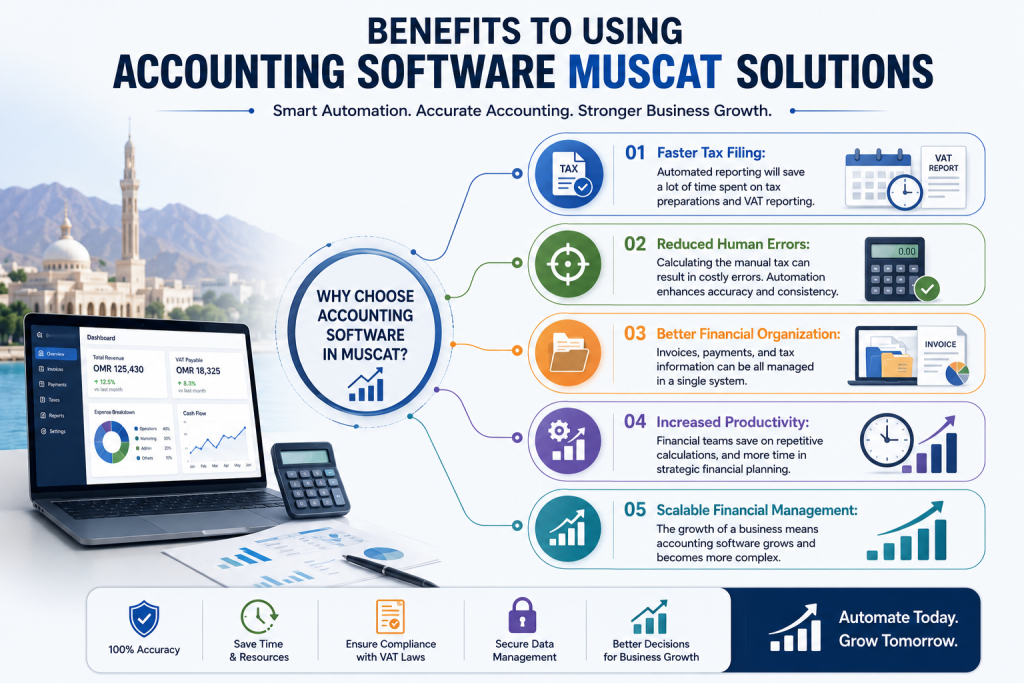
Benefits to using accounting software Muscat solutions:
Faster Tax Filing:
Automated reporting will save a lot of time spent on tax preparations and VAT reporting.
Reduced Human Errors:
Calculating the manual tax can result in costly errors. Automation enhances accuracy and consistency.
Better Financial Organization:
Invoices, payments, and tax information can be all managed in a single system.
Increased Productivity:
Financial teams save on repetitive calculations, and more time in strategic financial planning.
Scalable Financial Management:
The growth of a business means accounting software grows and becomes more complex.
Accounting Software Oman is critical for compliance:
In line with the VAT regulations, businesses must keep a proper record of transactions and submit appropriate tax reports. VAT accounting software oman solutions can effectively address these compliance requirements.
Automated VAT Tracking:
The system keeps a record of both:
- Input VAT
- Output VAT
This allows businesses to accurately calculate tax liabilities without manual recon.
Tax Return Preparation:
VAT software can generate VAT information in an organized report format, which streamlines the VAT return process.
This reduces:
- Reporting delays
- Compliance risks
- Data inconsistencies
- Calculation mistakes
Digital Record Maintenance:
Digital tax records are vital to audits and financial reviews.
VAT software stores:
- Tax invoices
- Financial transactions
- VAT summaries
- Customer records
- Vendor histories
This enhances access and data management.
Benefits of VAT Software in the Oman:
Businesses can benefit from implementing vat software in oman in various ways, both operational and compliance.
Improved Accuracy:
The automation of these systems limits human intervention in the tax calculation process, thus helping to avoid expensive errors.
Time Savings:
Preparing tax reports from spreadsheets manually can take hours, but now, businesses can prepare their tax reports within minutes.
Better Regulatory Compliance:
Businesses stay up to date with evolving VAT laws with automated reporting.
Financial Transparency:
Management has increased visibility of tax due and financial results.
Enhanced Security:
The modern accounting system safeguards financial documents by storing them in an encrypted cloud and with user permissions.
Future of Automated Tax Reporting in Oman:
Oman’s accounting and taxation landscape is transitioning to a more digital future. Today, smart financial systems are becoming increasingly popular in the business world and are making an impact on improving efficiency and making operations more streamlined.
New technologies are likely to bring in:
- AI-driven accounting automation
- Predictive tax analysis
- Advanced compliance monitoring
- Automated financial forecasting
- Smart reporting dashboards
Businesses that are equipped with new accounting solutions today will be better off to tackle future financial and regulatory changes.
With digital transformation of the business landscape in Oman ongoing, business accounting automation will be an integral part of the growth and business compliance.
Conclusion:
Businesses are embracing automated tax reporting in Oman, revolutionizing their financial practices. Enabling intelligent software solutions instead of manual accounting methods can help businesses get taxes right, prevent reporting inaccuracies and improve tax compliance efficiency.
Today’s erp software company offer companies a suite of tools to make financial management easier, from calculating VAT and managing invoices to integrating with ERP systems and generating real-time reports.
From retail to manufacturing, healthcare to construction, and services to anything in between, businesses in Oman can benefit from accounting software that ensures smooth operational tax management and contributes to their long-term success.
FAQs
Automated tax reporting is a feature of accounting software that automatically calculates taxes and organizes financial records, prepares VAT summaries and generates tax reports without manual calculations.
Using accounting software can make tax reporting simpler because it handles VAT calculations, records your invoices digitally, creates real-time financial reports and eliminates manual data entry errors.
Yes, modern accounting software can do this automatically as it is able to calculate VAT when the invoice is made and record tax liabilities on the move.
Automation eliminates human error and repetitive data entry, which minimizes errors due to human input and enhances financial accuracy.
Yes, there are accounting systems that do offer multi-branch operations because they gather the finances of several branches in a single reporting system.